
From referral-only growth to 100+ qualified meetings in a year
How a fully managed cold email system opened enterprise hospitality and real estate accounts for an Indian decor manufacturer.
The situation
The company made premium decor for commercial spaces and sold almost entirely through referrals and repeat clients. That kept the lights on, but it capped growth: no way into large hospitality groups or real estate developers, no international pipeline, and a sales team spending its time chasing unqualified enquiries instead of closing.
Revenue was unpredictable because lead flow was unpredictable. The product was strong. Distribution was the bottleneck.
What we did
We built and ran two fully managed outbound campaigns in parallel.
Domestic: targeting decision-makers at Indian hospitality groups, real estate developers and luxury brands. Procurement heads, design leads, project heads. Multi-touch sequences, one personalisation line per prospect, soft CTAs, every reply handled by us and meetings booked straight into the client's calendar.
International: a separate campaign built for overseas buyers, opening a pipeline of global projects the company had never had access to.
All infrastructure, list building, copy, sending and reply handling was ours. The client's only job was showing up to the meetings.
The results
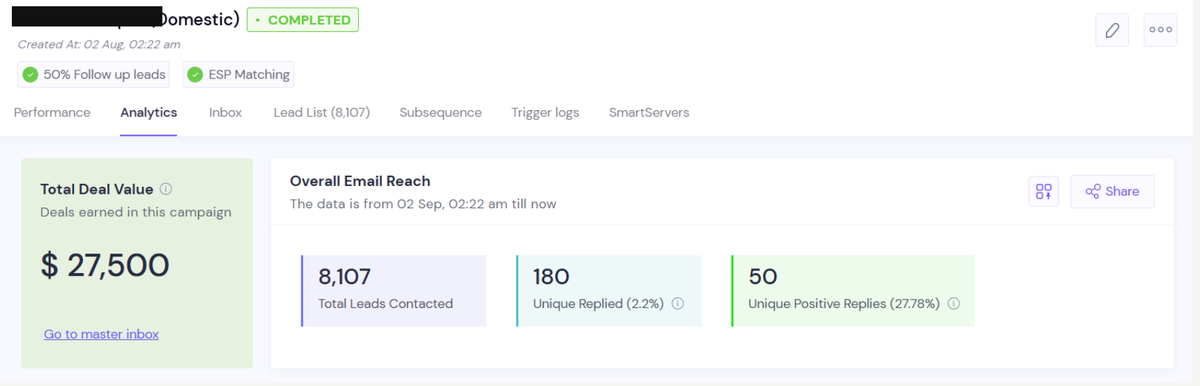
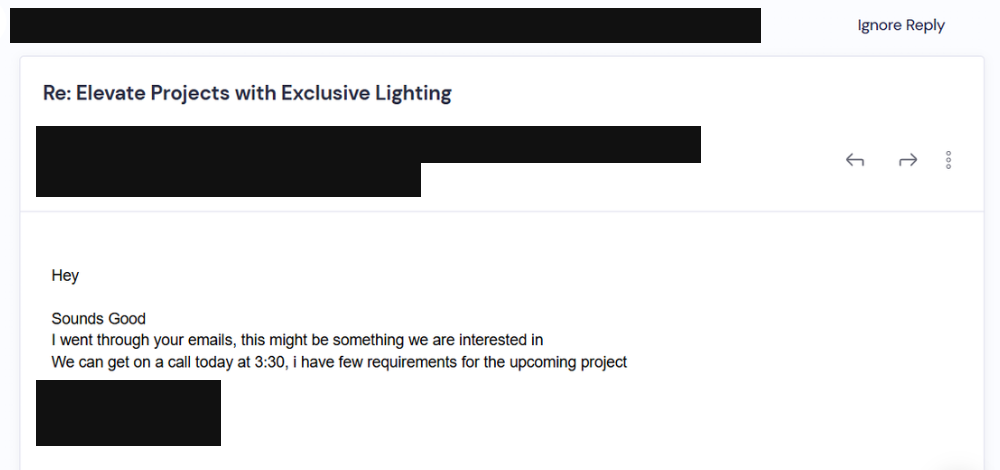
The domestic campaign settled into a rhythm of 8 to 10 qualified meetings a month with top Indian hospitality and real estate groups, including conversations with brands the company could never get past the front desk of before.
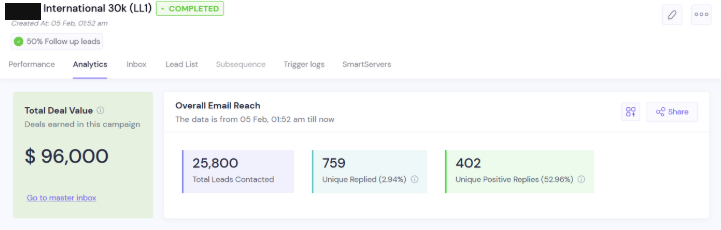
Across both campaigns: 33,900+ leads contacted, 452 positive replies, over 100 meetings in a year, and $123,500 in tracked deal value logged in-platform ($96,000 international, $27,500 domestic).
What we learned
Apollo and similar databases severely undercount Indian manufacturers because factory workers are not on LinkedIn. Employee-count filters silently exclude the best prospects. We qualify Indian manufacturers on revenue signals and physical footprint instead, which is a big part of why this targeting worked where generic list-building fails.